March 3, 2026 · 6 min read · Synthetic · Cold climate
Why synthetic beats conventional every time
Conventional oil is refined crude: wax, sulfur, and molecules that were never designed to lubricate. A synthetic is built for the job, which is why it starts at 40 below and can stay in for a year.
At a glance, motor oil is motor oil. The difference is the molecule. Conventional oil is refined from crude. What comes out of the tower still carries wax, sulfur, nitrogen, oxygen, and bits of metal that never had a job in an engine. Those irregular molecules thicken in the cold, shear when they get hot, and leave sludge when they oxidize.
A synthetic is chemically built. The base stock is a uniform chain. Nothing in it is there by accident. That is why AMSOIL synthetic oil flows on a Wasilla morning that gels a conventional 5W-30, and why the film is still there when the oil is hot.
Cold starts and hot oil
Alaska is the test conventional oil fails. From a −40°F start to a July grade on the Parks Highway, the same sump has to pump and then protect. Conventional oil thickens as its wax crystallizes, so the first seconds after the key are the seconds the bearings run dry. It also shears and burns off once the engine is at temperature.
Signature Series 0W grades are built for that swing. They crank when conventional oil will not, and they hold viscosity after the engine is hot. Easier starts, faster oil pressure, less wear on the coldest mornings of the year.
The film, the drain, and the deposits
Only a film of oil keeps the cam and the bearings from touching. A designed synthetic holds that film longer than a refined conventional oil, because the base stock itself resists shear. Independent testing of Signature Series 0W-20 showed 75% more engine protection against horsepower loss and wear than a leading industry standard requires, using ASTM D6891.
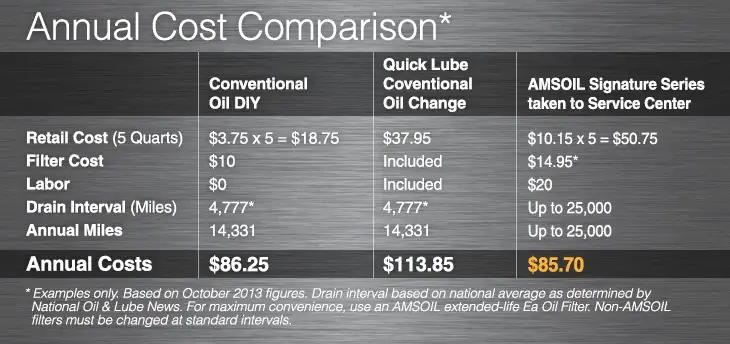
Conventional oil is usually changed every 3,000 to 5,000 miles because it is used up. Signature Series is formulated for up to 25,000 miles or one year in normal service, whichever comes first. Severe service — short trips, towing, and Alaska cold starts that never fully warm the oil — is 15,000 miles or one year. Fewer drains are less time, less money, and less waste oil.
The same chemistry resists oxidation, so it leaves less sludge. Lower friction shows up as fuel economy and less oil burned past the rings. Conventional oil volatilizes more readily, and that burned oil leaves through the tailpipe.
What we see in the Valley
The switch is the same on a commuter, a work truck, a boat, or a snowmachine: use the grade the manual lists, pour a synthetic that was built for that grade, and stop treating 3,000 miles as a law of nature. If you are not sure which bottle, the vehicle lookup tagged to dealer 1245102 will name it.

AMSOIL Signature Series Synthetic Motor Oil
The bottle this guide is about. Opens the AMSOIL store with 907 Synthetics as the dealer of record.
Shop Signature Series