January 8, 2026 · 7 min read · Cold climate · Viscosity
What viscosity actually starts at 20 below
0W is not a marketing flourish in the Mat-Su. A field guide to pour point, cold-cranking, and which AMSOIL grades belong in an Alaskan crankcase.
What a year of oil actually costs
Conventional 5W-30 changed every 3,000–5,000 miles versus AMSOIL Signature Series 5W-30 at its 25,000-mile / one-year interval, 5 qt per change. Signature Series at the AMSOIL retail price; Preferred Customer at the member price plus the $20/year membership. Includes $40 typical shop labor per oil change; filters not included.
Conventional 5W-30
Changed every 3,000–5,000 miles · $7.88/qt
$318–$556
4–7 changes / year
Signature Series
Every 25,000 miles or 1 year · retail price
$130
1 change / year
Preferred Customer
Signature Series at member price + $20/year membership
$130
1 change / year
Next to conventional, Preferred Customer saves about $188–$426 a year, with 15–30 fewer quarts of waste oil — before you count the wear you did not put on the engine.
Prices as of October 2, 2026. Conventional: Pennzoil 5W-30 conventional motor oil, $7.88/qt at Walmart.com (Oct 2, 2026). AMSOIL figures are based on current AMSOIL retail and Preferred Customer pricing as of October 2, 2026, plus the $20/year membership; see AMSOIL.com for current pricing. Conventional range: low figure at a 5,000-mile change interval, high figure at 3,000 miles, rounded to whole changes. Includes $40 typical shop labor per oil change (an observed shop cost, not a quote), applied to every conventional and every AMSOIL change; oil filters are not included. Actual prices may vary.
Most engine wear in Alaska happens in the first ten seconds after you turn the key. The oil is still in the pan. The bearings are dry. Conventional 5W-30 that looked fine on a Seattle shelf is a gel in a Wasilla driveway at −20°F.
Viscosity grades are a two-part promise. The number before the W is winter flow. The number after is thickness at operating temperature. A 0W-40 is thin enough to crank in deep cold and thick enough to protect a hot diesel on the Parks Highway in July. A 15W-40 is the second half of that sentence only.
What the W actually measures
Cold-cranking simulator (ASTM D5293) measures how hard the starter has to work to turn the engine with that oil. Pour point (ASTM D97) is when the oil stops flowing under its own weight. Both numbers matter here. AMSOIL Signature Series 0W-20 and 0W-40 are built around them — no wax, uniform molecules, and published pour points of −65°F (0W-20) and −58°F (0W-40).
Conventional oil is refined from crude. Wax is inherent. When the temperature drops, that wax crystallizes and the oil thickens far faster than the grade on the bottle suggests. Synthetic base stocks do not carry that wax. They stay liquid because they were designed that way, not because a pour-point depressant is papering over a winter problem.

A practical Alaska map
Southcentral (Anchorage, Wasilla, Kenai): Signature Series 0W-20 or 0W-30 for gasoline engines that specify those grades. 0W-40 Max-Duty for diesels that allow it. You will see −20°F several times a winter. You will see +80°F in July. The wide grade covers both.
Interior (Fairbanks, North Pole, Delta): Treat −40°F as a design condition, not a headline. 0W is not optional. If the OEM only lists 5W-30, talk to us — many 0W-30 synthetics still meet the high-temp spec the manufacturer actually cares about.
Do not chase a heavier summer oil and then try to survive winter on it. The whole point of a 0W-40 is that you do not have to swap seasonal inventories.
Always match the spec
Cold flow is useless if the oil is not licensed for your engine. Use the AMSOIL vehicle lookup, or call (907) 350-7366 with the year, make, model, and engine. Fredric will put the right bottle in the cart — including the filter that lasts the same interval.
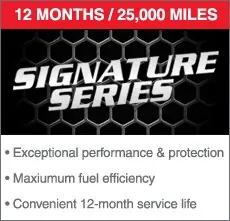
AMSOIL Signature Series Synthetic Motor Oil
The bottle this guide is about. Opens the AMSOIL store with 907 Synthetics as the dealer of record.
Shop Signature SeriesRelated: The pre-winter six-fluid check · Alaska freeze-up fluid guide