
Trailer Care · Alaska Seasonal Checklist
Repack Your Trailer Bearings Before Snowmachine Season: An Alaska Checklist
By Fredric Riech · 907 Synthetics · Wasilla, AK · (907) 350-7366
If your trailer could talk, it would tell you it works two jobs up here. All summer it hauls the boat to the launch, the side-by-side out the trailhead road, or a load of lumber for the project that was supposed to be done by July. Then the snow flies, and that same trailer is suddenly your snowmachine hauler — headed out before daylight, in the cold, often a long way from home.
That changeover is exactly why fall is bearing time in Alaska. The bearings that got dunked at the launch all summer are the same ones you are about to trust with your sleds on an icy highway. A little driveway time now beats kneeling in a snowbank on the side of the road later, trying to figure out why a wheel is smoking.
I am Fredric Riech with 907 Synthetics here in Wasilla. This is the simple, local version: how to tell if your bearings need attention, what a repack actually involves, and when it makes more sense to hand the job to a shop.
Why Bearings Fail Here
Trailer bearings live a harder life in Alaska than most places, and it usually comes down to three things.
- Launch-ramp water. Every backing into the water can push moisture past a tired seal, especially if the hub is warm and the water is cold. Water in the grease does not lubricate — it corrodes, and it can sit in there quietly doing damage.
- Long, cold hauls. Our trips are not around the block. Hours on the highway build heat in a bearing that is low on good grease or set up wrong, and cold starts are hard on grease that is already contaminated or worn out.
- Sitting. This one catches people. A trailer that sits for months — in the yard, in the snow, wherever — can develop rust spots where the rollers rest, and seals can dry and stick. The bearing did not wear out moving. It went bad parked.
None of that means you need to panic about your trailer. It just means bearings up here deserve a look on a schedule, not just when something feels wrong on the Parks Highway.
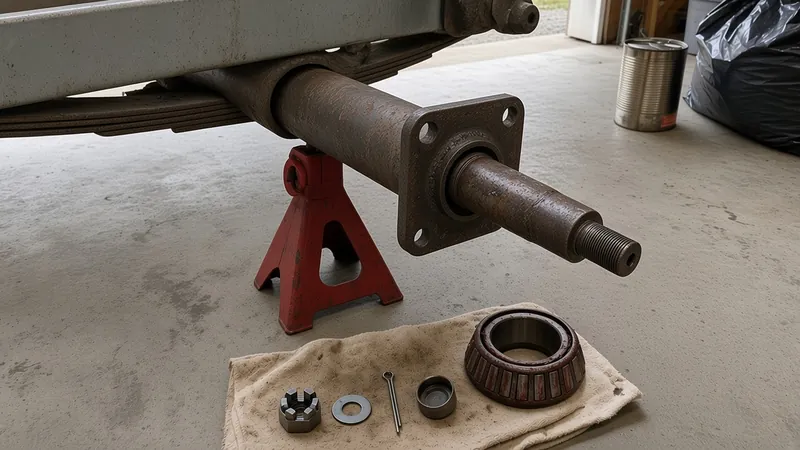
The 10-Minute Driveway Check
You do not need to tear anything apart to get a first read. Do this on each wheel, one side at a time:
- Spin. With the wheel off the ground, give it a good spin by hand. It should turn smoothly and quietly, and coast to a stop without a catch or a sudden grab.
- Listen. Get your ear close while it spins. Growling, rumbling, clicking, or a gritty sound is your bearing telling you the rollers or races are no longer smooth — or that there is contamination in there.
- Play. Grab the tire at the top and bottom and rock it. A small amount of movement can be normal depending on the hub, but a clear clunk or loose, sloppy play means things need a closer look before you load up.
- Heat. After a short tow, carefully feel near the hub — or better, compare side to side. One hub noticeably hotter than the other is a warning sign. Check this on a fuel stop too, all season long. It takes ten seconds.
Safety first: Always support the trailer on jack stands rated for the load — never work with a wheel off the ground held up by a jack alone. Chock the other wheels, work on flat ground, and keep hands, hair, and loose clothing clear of a spinning wheel.
If all four checks feel smooth, quiet, tight, and even, you are in decent shape. If anything sounds rough, feels loose, or runs hot, do not just add a pump of grease and hope. That is when a repack — or a closer inspection — is due.
What a Repack Actually Involves
A repack is not magic, and it is not just topping off grease. In plain terms, it means taking the hub apart, getting the old grease and the bearings out where you can actually see them, cleaning and inspecting everything, and putting it back together with fresh grease and seals as needed.
The inspection is the whole point. Cleaned up, a good bearing looks smooth and even. A tired one may show pitting, discoloration from heat, scoring, or rollers that feel rough as you turn them in your hand. Catching that on the workbench is the win — a questionable bearing is far cheaper and easier to deal with at home than on the shoulder.
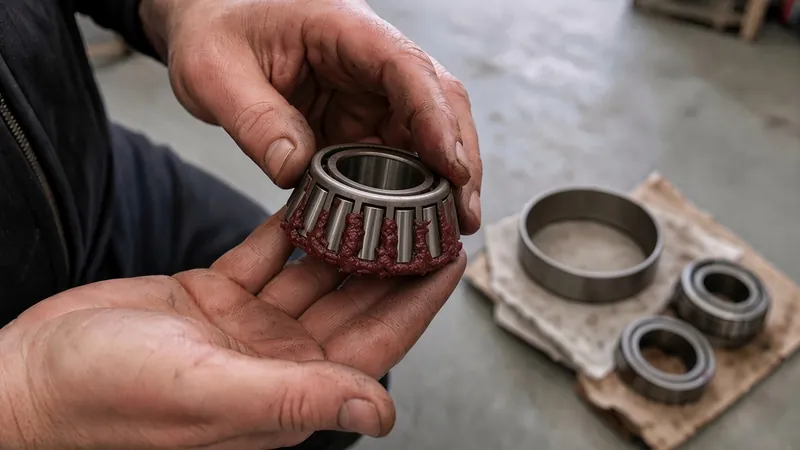
I am deliberately keeping this at the overview level. For the full step-by-step, follow the corporate walk-through from AMSOIL: How to Repack Trailer Bearings. Read it through before you start, follow your trailer and hub manufacturer’s instructions for your specific setup, and use the grease your hub or trailer manufacturer calls for — that specification matters more than any brand preference, mine included.
If you have never done one, your first repack is a good one to do slowly, on a warm-ish day, with everything laid out in order as it comes apart — just like in the photo above. Take a picture at each stage with your phone. Future you will say thanks.
When to Hand It to a Shop
There is no prize for doing this yourself. Hand it to a shop if:
- A bearing feels rough, looks pitted or heat-discolored, or the races show damage — replacement and proper setup matter here.
- You find water, rust, or milky-looking grease and are not sure how far the damage goes.
- The hub, spindle, or seal surface is scored or damaged.
- You have brakes in the hub and are not comfortable inspecting and reassembling them.
- You are short on time before a trip. A shop’s lift and experience can be money well spent in October.
A good shop will also tell you honestly if your bearings were fine. That peace of mind is worth something heading into winter.
Supplies, the Local Way
Before you start, line up your supplies so you are not mid-job with greasy hands making a parts run: fresh grease of the type your hub manufacturer specifies, new seals if yours call for replacement on removal, cotter pins, solvent and rags, gloves, and a way to catch and dispose of old grease and solvent properly.
Not sure what your trailer, truck, sled, or ATV calls for? Start with the AMSOIL Product Guide — look it up by vehicle or equipment, and follow the manufacturer’s specification first. If you order through AMSOIL, ask me about becoming a Preferred Customer before you check out; it is the way most of my regular customers order. And for folks in the Anchorage area: AMSOIL orders can be picked up at Carlile in Anchorage, 1930 Spar Ave. Per AMSOIL order confirmations, pickup orders are generally ready in about 2 hours — handy when you need supplies this week, not next week. Wasilla folks, I am local, so reach out and I will help you get the order right the first time.
Before You Load the Sleds: Final Checklist
- Bearings: driveway check done (spin, listen, play), hubs checked for heat after a short tow
- Tires: pressure checked cold, tread and sidewalls inspected, no cracking or bulges, lug nuts torqued
- Spare: inflated and actually fits your hub — plus a spare bearing kit, lug wrench, and jack that works with this trailer
- Lights: running, brake, turn, and plate lights all working; connector clean and seated
- Hitch: correct ball size, coupler latching fully, pin or lock in place
- Safety chains: crossed under the tongue, sound links, hooked so they will not drag
- Deck and ramps: clear of ice, tiedowns in good shape, sleds secured front and rear
Do that list once in the driveway and your first sled trip of the season gets a lot less interesting — in the good way.
While you are thinking about winter prep, take a look at our snowmobile pages for your sleds, our ATV and UTV pages if the wheeler is still working this fall, and how to buy AMSOIL in Alaska for ordering and Anchorage pickup details.
Related: The pre-winter six-fluid check · Alaska freeze-up fluid guide — for the truck that tows it.
The Grease for This Job
For boat and snowmachine trailers that see water, mud, snow and ice, AMSOIL recommends its AMSOIL Synthetic Water-Resistant Grease — formulated for applications frequently exposed to water, and suitable for wheel bearings where an NLGI #2 GC-LB grease is specified. Always confirm that specification matches what your trailer or axle manufacturer calls for first.
Shop AMSOIL Synthetic Water-Resistant Grease — this link carries my dealer number so AMSOIL credits 907 Synthetics with your order.
Questions About Your Trailer — or Anything With an Engine?
I am happy to help you look up the right products for your trailer hubs, truck, sleds, and wheelers, and to walk through ordering or Anchorage pickup. No pressure, just local help from a fellow Alaskan who would rather see you riding than wrenching on the roadside.
Call or text 907-350-7366 — Fredric Riech, 907 Synthetics, Independent AMSOIL Dealer, Wasilla, AK