
Winter Prep • Alaska Seasonal Checklist
The Pre-Winter Six-Fluid Check: A Mat-Su Driveway Walkaround Before the Deep Cold
By Fredric Riech · 907 Synthetics · Wasilla, AK · (907) 350-7366
By November the leaves are long gone, the Knik winds have started, and most of us have already scraped a windshield or two. What hasn’t happened yet — usually — is the real cold. The stretch where the truck sits plugged in overnight, the morning commute down the Glenn starts in the dark at well below zero, and a long drive to the trailhead with the sled trailer means hours between towns.
That gap between first snow and deep cold is the best time to give your vehicle’s fluids one honest look. Everything is still easy to reach, you can work in the garage without your fingers going numb, and if something needs attention you have time to order parts or get on a shop’s schedule before the holiday rush.
I am Fredric Riech with 907 Synthetics in Wasilla. This is the walkaround I’d suggest to a neighbor: six fluids, what you can read from each one in your own driveway, and where to stop and let a shop take over. It takes about half an hour once you know where everything is.
Before You Start
- Grab the owner’s manual. Every vehicle hides its dipsticks and reservoirs a little differently, and the manual tells you which fluid type each system needs. That specification beats any general advice, mine included.
- Park on level ground. A sloped driveway can fool almost every level reading on this list.
- Know which checks need a cold engine and which need a warm one. Oil and coolant are checked cold. Many automatic transmissions are checked warm and running. I’ll call it out as we go.
- Have on hand: clean rags or shop towels, a flashlight, gloves, and a small notebook (or your phone) to jot down what you find.
1. Engine Oil
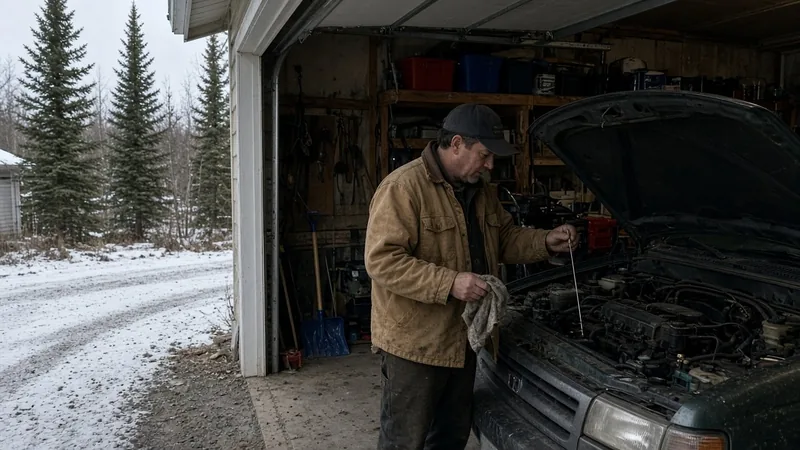
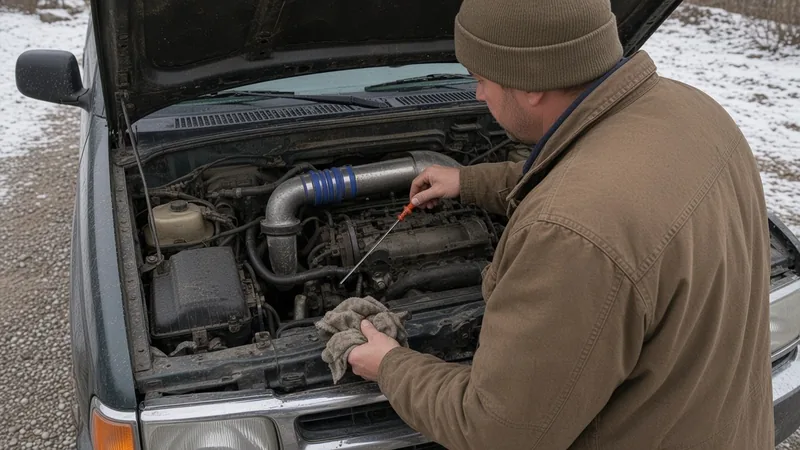
Start with the one everybody knows. With the engine off and cooled down, pull the dipstick, wipe it clean, push it all the way back in, and pull it again. The film should land between the two marks. If it’s at or below the low mark, top up with the oil your manual calls for and recheck — don’t overfill.
While it’s out, look at it. Dark oil on its own isn’t a crisis; that is often the oil holding dirt in suspension like it’s supposed to. The things that should get your attention are a milky, creamy look (possible coolant getting in), a strong fuel smell, or grit you can feel between your fingers. Any of those deserves a closer look before winter, not after.
The Alaska part: if you’re near the end of an oil-change interval, do the change now rather than in January. Cold starts are where oil has to flow fastest with the least help, and you want fresh oil of the correct viscosity in there for them.
2. Coolant / Antifreeze
Coolant earns its “antifreeze” name up here. Only check it with the engine cold — a hot cooling system is under pressure, and opening it can spray scalding fluid.
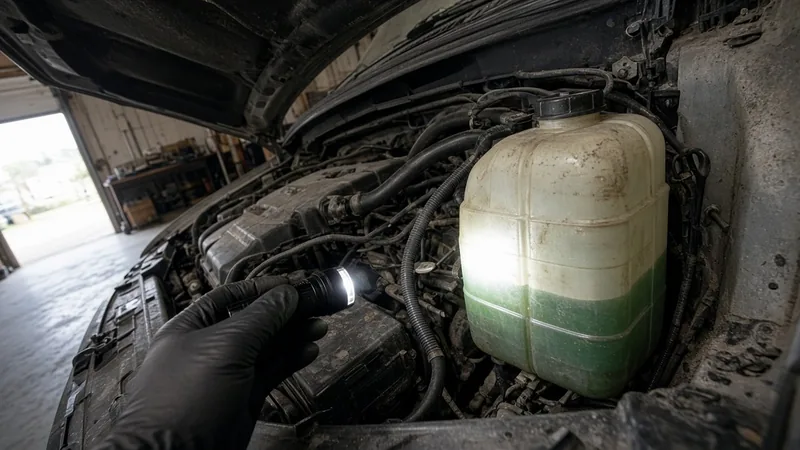
- Level: look at the overflow tank and make sure the coolant sits between its cold-fill marks.
- Condition: it should look clean and bright. Rusty, muddy, oily, or slimy coolant means it’s time for a shop to look at the system.
- Freeze protection: this is the one people skip. Most parts stores or shops will test it in a minute and tell you how cold your mix is protected to. Compare that to the coldest nights you actually see — Mat-Su and the Valley floor can sit far below zero, and the Interior colder still. If someone topped it off with plain water over the summer, the protection may not be what you think.
If you need to add coolant, use the type your manufacturer specifies. Coolant chemistries are not all interchangeable, and mixing types can cause problems you won’t see until later.
3. Transmission Fluid
Automatic transmission fluid is easy to forget because it doesn’t get changed often. On vehicles that have a transmission dipstick, the check is usually done with the engine warm and idling, parking brake on, and the shifter in the position your manual says. Read the level against the marks for the temperature you’re checking at.
Then look at the fluid on the stick. Healthy fluid is usually translucent and red or pinkish. Fluid that’s dark brown, smells burnt, or has particles in it is telling you it’s had a hard life — and in Alaska, towing to the boat launch, hauling sleds over Hatcher Pass road, long highway runs, and lots of cold idling put most of us closer to “severe service” than we’d like to admit.
A lot of newer vehicles don’t have a transmission dipstick at all. Checking those often takes a lift, a specific fluid temperature, and a fill-plug procedure. If that’s your rig, skip the driveway check and ask a shop to look at it during your next service. Don’t guess at the level on a sealed transmission.
4. Brake Fluid — the Forgotten One
If you only take one new habit from this post, make it this one. Most brake fluid is hygroscopic: it slowly pulls moisture out of the air through hoses, seals, and every time the cap comes off. You can’t see it happen. Over time that water lowers the fluid’s boiling point and encourages corrosion inside expensive parts like calipers, the master cylinder, and the ABS unit.
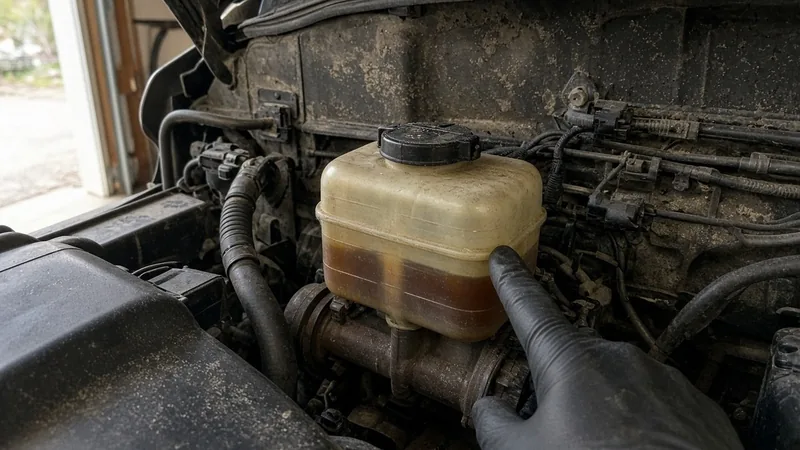
The driveway check is simple: find the reservoir (usually on the driver’s side near the firewall), and make sure the fluid sits between MIN and MAX. Note the color — fresh fluid is clear to light amber, while old fluid trends darker.
Two things to know about the level:
- A level that has slowly dropped can just mean your pads are wearing — the calipers hold more fluid as the pads get thinner. That’s a reminder to have the pads looked at, not a reason to fill it to the brim.
- A level that drops quickly, or any wet spot near a wheel or under the master cylinder, is a leak. Don’t drive on it — get it to a shop.
Follow your manufacturer’s brake-fluid change interval and use the DOT type it calls for (it’s usually printed on the reservoir cap). Never mix silicone-based DOT 5 with the common glycol-based DOT 3, 4, or 5.1 fluids. Many drivers have never had their brake fluid changed at all; if that’s you, put it on the list for this fall.
Brakes are safety-critical. Bleeding or flushing brakes means the vehicle is raised, wheels are off, and the hydraulic system is opened. If you do it yourself, support the vehicle on jack stands rated for its weight — never on a jack alone — and never let the reservoir run dry while you work. If the pedal feels soft, sinks, or doesn’t come back firm afterward, stop and take it to a shop. Same goes for ABS warning lights. For most people, a brake fluid exchange is a great job to hand to a pro.
5. Power Steering Fluid (If You Have It)
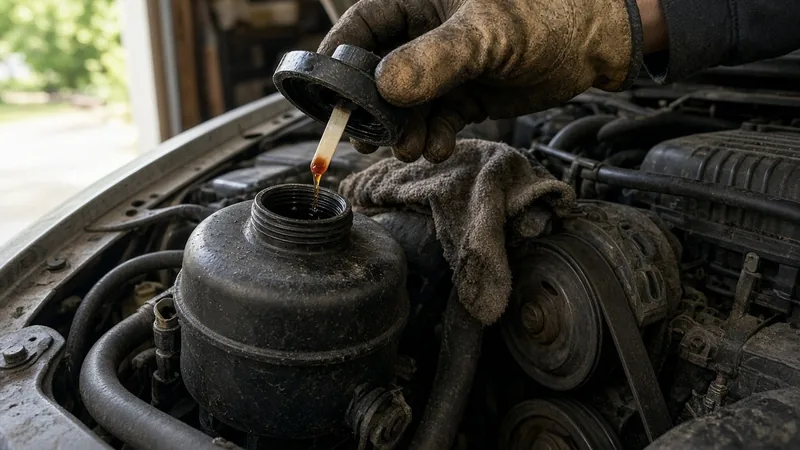
Many newer vehicles use electric power steering and have no fluid to check, so look in your manual first. If yours has a hydraulic system, the reservoir is often near the front of the engine bay, and its cap may have a small dipstick with separate “hot” and “cold” ranges — read the one that matches the engine’s temperature.
Low fluid, a whine when you turn the wheel, or steering that feels heavy on the first cold morning are all worth a look. Steering that groans when it’s cold and quiets down as it warms is common; steering that stays noisy or stiff isn’t. Top up only with the fluid your manual specifies — some systems want ATF, others a dedicated power steering fluid.
6. Differential and Transfer-Case Gear Lube
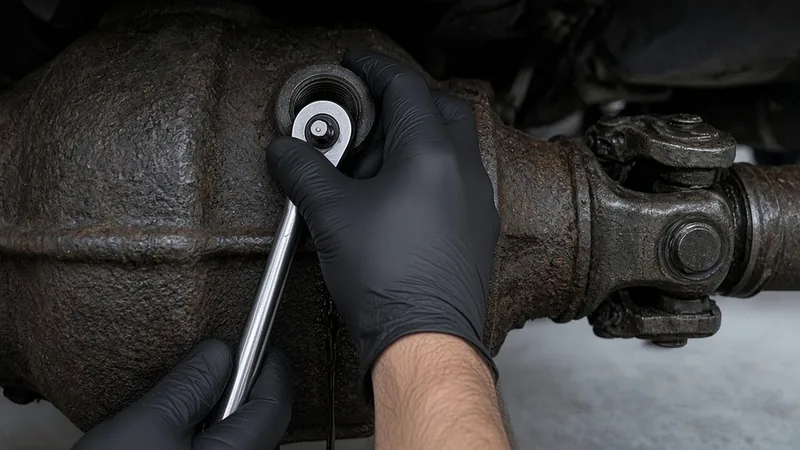
These are the fluids nobody sees and almost everybody forgets, and they work hard up here: four-wheel-drive on icy roads, backing a trailer up a slick ramp, water crossings on summer trails, and long cold hauls. On most traditional axles, the check means cleaning around the fill plug, removing it, and confirming the gear lube comes up to about the bottom of the hole. Check it with the vehicle level, and if you have to get underneath, use jack stands.
If a little lube on your fingertip looks milky, water has gotten in — common after deep water crossings or a plugged axle vent. Gritty or glittery lube can mean wear. Either is a reason to change it, and it’s worth looking at the axle seals and the vent while you’re there. Use the viscosity and specification your manufacturer calls for; axles with limited-slip units may need a specific product or additive.
Transfer cases vary even more by make and model. Many have a fill plug on the side, some use a specific fluid, and some are best left to a shop. I’ll do a deeper dive on differentials and transfer cases in a future post.
Bonus: Washer Fluid
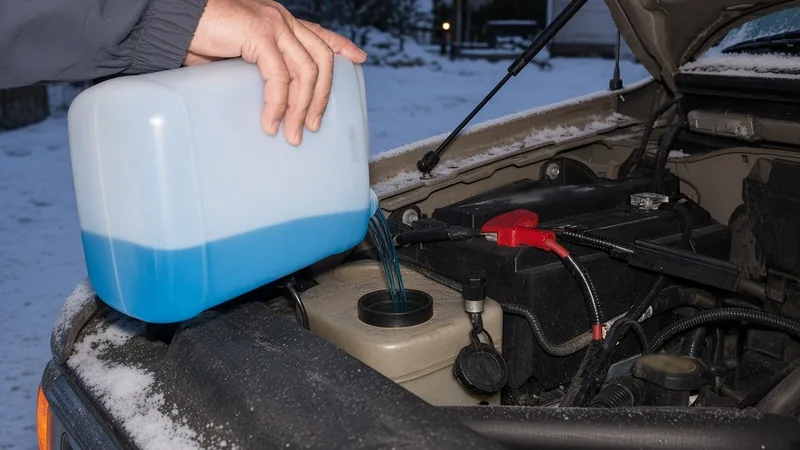
It doesn’t lubricate anything, but try driving the Parks in slush behind a semi without it. Run the summer stuff out and fill with a washer fluid rated for winter temperatures — summer fluid can freeze in the reservoir and lines, and it can freeze on the glass too. Toss a spare jug behind the seat.
When to Hand It to a Shop
The point of this walkaround is to notice things early, not to turn every driveway check into a project. Hand it off if you find:
- Milky oil, or coolant that’s low again soon after topping off — possible internal leak.
- Any brake fluid leak, a soft or sinking pedal, or a brake or ABS warning light.
- Burnt-smelling or dark transmission fluid, or a transmission without a dipstick that you suspect is low.
- Milky or gritty gear lube, or a wet axle seal.
- Anything you’re not sure about. Fall is when shops have room; January is when everyone else calls them.
For the generic, all-vehicles version of these steps, AMSOIL’s corporate blog has a good walk-through: How to Check Your Car’s Fluids. Read it alongside your owner’s manual.
Supplies, the Local Way
Not sure what your truck, car, sled, or wheeler calls for? Start with the AMSOIL Product Guide — look it up by vehicle or equipment, and follow the manufacturer’s specification first. If you order through AMSOIL, ask me about becoming a Preferred Customer before you check out; it’s how most of my regular customers order. For Anchorage folks, AMSOIL orders can be picked up at Carlile, 1930 Spar Ave. in Anchorage — per AMSOIL order confirmations, pickup orders are generally ready in about 2 hours. Wasilla and Palmer folks, I’m local, so reach out and I’ll help you get the order right the first time.
Pre-Winter Six-Fluid Checklist
- Engine oil: level between the marks, no milkiness or fuel smell; change it now if it’s close to due
- Coolant: checked cold, level at the cold-fill mark, clean, and freeze protection tested
- Transmission: level read the way your manual says, fluid not dark or burnt (or shop check if sealed)
- Brake fluid: between MIN and MAX, color noted, no leaks, change interval checked
- Power steering: level in the correct hot/cold range, no whine or stiffness (if equipped)
- Diff and transfer case: fill-plug level checked, lube not milky or gritty, seals dry
- Bonus: winter-rated washer fluid in the tank and a spare jug in the truck
While you’re in winter-prep mode, check our trailer bearings checklist before the first sled trip, our snowmobile pages for the sleds themselves, our ATV and UTV pages if the wheeler is about to start plow duty, and how to buy AMSOIL in Alaska for ordering and Anchorage pickup details.
The Brake Fluid for This Job
If your brake fluid is due, AMSOIL DOT 3 and DOT 4 100% Synthetic Brake Fluid is made for passenger car, light truck, and powersports systems that call for a DOT 3, DOT 4, or DOT 5.1 fluid. AMSOIL designed it to fight water contamination and stay responsive in the cold, which is exactly what we ask of brakes up here. Do not mix it with silicone-based DOT 5 fluid, and always confirm the DOT type your vehicle’s manufacturer specifies first.
Shop AMSOIL DOT 3 and DOT 4 100% Synthetic Brake Fluid — this link carries my dealer number so AMSOIL credits 907 Synthetics with your order.
More guides: Alaska oil viscosity guide · How to check power steering fluid · Choose your drain interval · AMSOIL for cars and light trucks · Diesel trucks
Related: Alaska Freeze-Up Fluid Guide: six driveway checks before the first cold snap
Questions About Your Truck — or Anything With an Engine?
I’m happy to help you look up the right oil, coolant, transmission fluid, brake fluid, and gear lube for your rigs, and to walk through ordering or Anchorage pickup. No pressure, just local help from a fellow Alaskan who would rather see you warm and moving than stuck in a pullout at twenty below.
Call or text 907-350-7366 — Fredric Riech, 907 Synthetics, Independent AMSOIL Dealer, Wasilla, AK